
Orange County Directory Collections
The Orange County city directory shelf is distributed across library, archive, and digital channels. Exact annual Orlando runs are not published in the official catalogs inspected for this project, so a volume-level catalog search or staff check is essential. The table distinguishes verified items from collections whose individual years still need confirmation.
| Collection | Verified years | Where held | Access |
|---|---|---|---|
| Orlando city directories, including later Polk volumes | Multiple annual and intermittent volumes; exact run unverified | OCLS Genealogy Collection and Regional History Center | Ask catalog or staff for the exact year |
| Telephone and criss-cross directories | Twentieth-century runs; shelf years unverified | OCLS reference holdings and History Center | Reference-room access |
| Social Register of Orlando | 1937 | Orlando Memory | Free scanned PDF |
| First Methodist souvenir directory and yearbook | 1916 | Orlando Memory | Free item page |
| St. James Cathedral centennial directory | 1885–1985 commemorative volume | Orlando Memory | Free item page |
| Orlando Senior High yearbooks | 1924 and 1927 | Orlando Memory | Free digitized items |
| Colonial High School yearbook | 1963 | Orlando Memory | Free digitized item |
| Federal population census | Public Florida schedules through 1950 | NARA, FamilySearch, and library databases | Online or library access |
A city directory titled for Orlando may include Winter Park or other nearby communities, yet still omit much of Orange County. Check the title page every year. Publication gaps, changed publishers, and shifting coverage are evidence to document, not blanks to fill with an assumed continuous range.
Orange County Genealogy Shelves
Orange County Library System's genealogy overview points researchers to the West Oaks Branch and Genealogy Center. Its collection spans every U.S. state and other countries, while genealogy classes and staff help provide a practical path when the catalog does not reveal a directory's exact year or location.
The library guide also identifies census schedules, births, marriages, deaths, voter lists, military records, city directories, and obituaries in Ancestry Library Edition. Database access terms can change, so check the current OCLS database listing and card rules before expecting remote access.
The image below captures the library's current genealogy starting point.
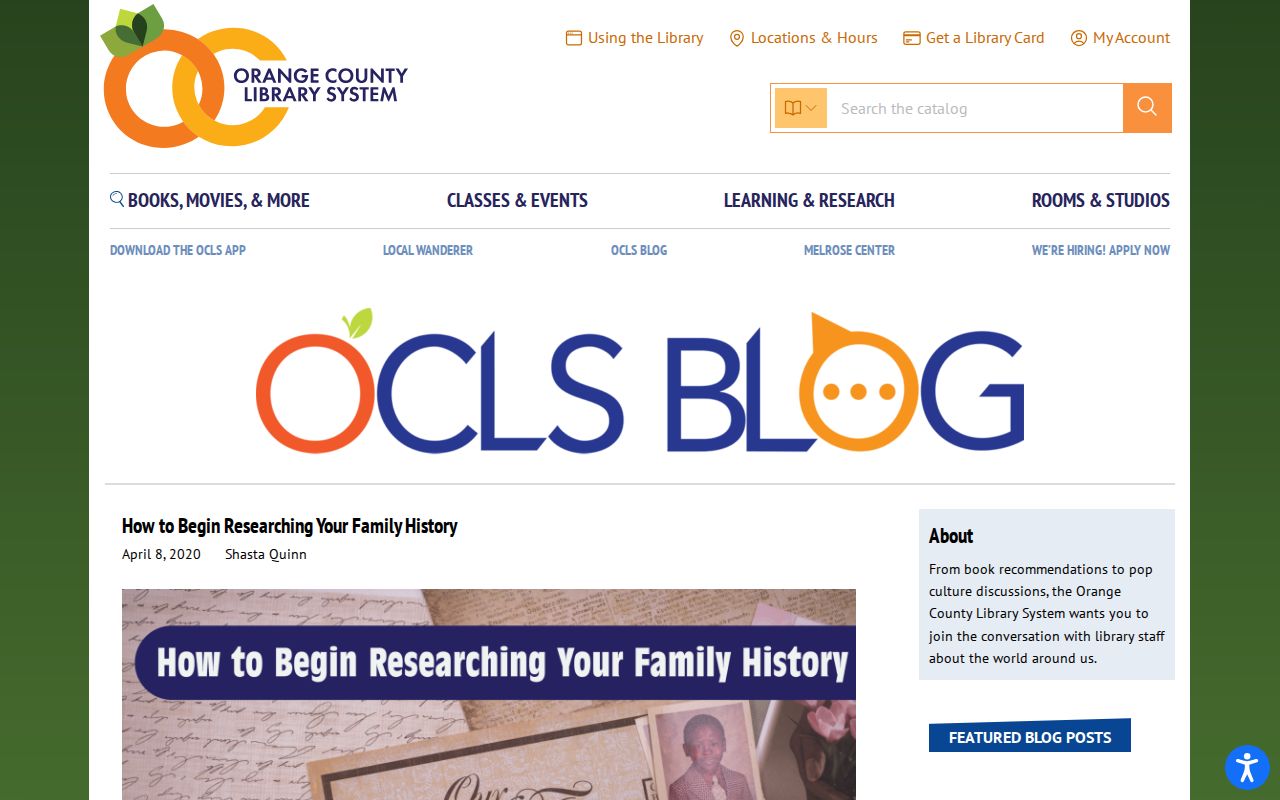
The guide supports a mixed workflow: search databases, then ask staff for local print, microfilm, or reference holdings that do not have a public volume list online.
Read an Orange County Directory
A conventional Polk-style city directory entry often gives surname, first name or initial, spouse, occupation or employer, and a residence address. Widowhood may be abbreviated as “wid,” home as “h,” residence as “r,” boards as “bds,” and workplace as “emp” or “wks.” Those are common conventions, not confirmed marks for every Orlando volume. Verify them against the edition's own key.
| Printed name | Copy initials, punctuation, spelling, and name order exactly. |
|---|---|
| Spouse or widow note | May separate two same-name residents or point toward marriage and death records. |
| Occupation or employer | Can distinguish people and lead to newspapers or an institutional archive. |
| Residence | Record number, direction, street, type, and any listed unit. |
| Edition evidence | Photograph the title page and key so the entry remains interpretable later. |
Do not equate a householder with a homeowner, renter, or every adult at the address. The alphabetical section follows names. A street guide, when present, rearranges entries by address and can show the listed neighbors.
- Criss-cross directory
- A section or volume ordered by street and house number, useful for turning an address into a listed occupant.
- Householder index
- A list centered on the person recognized by the publisher as the household's main entry, not a full census.
- Abbreviation key
- The edition's legend for shortened terms. Save it because publisher conventions and marks can change.
Search Orange County Directory Memory
Orlando Memory is an OCLS repository organized around people, places, groups, events, and topics. Its item pages may carry photographs, oral histories, church directories, yearbooks, newsletters, funeral-home history, and files that can be downloaded. A keyword query can lead to material not indexed as a formal city directory.
The collection includes the First Methodist Church's 1916 souvenir directory and yearbook, St. James Cathedral's centennial directory, Orlando Senior High School yearbooks from 1924 and 1927, a 1963 Colonial High School yearbook, and Friends of the Library newsletters from 1980 through 1996. School, church, and club records may supply a middle name, portrait, class, role, or associate when an annual directory entry is sparse.
See the Orlando Memory collection gateway.
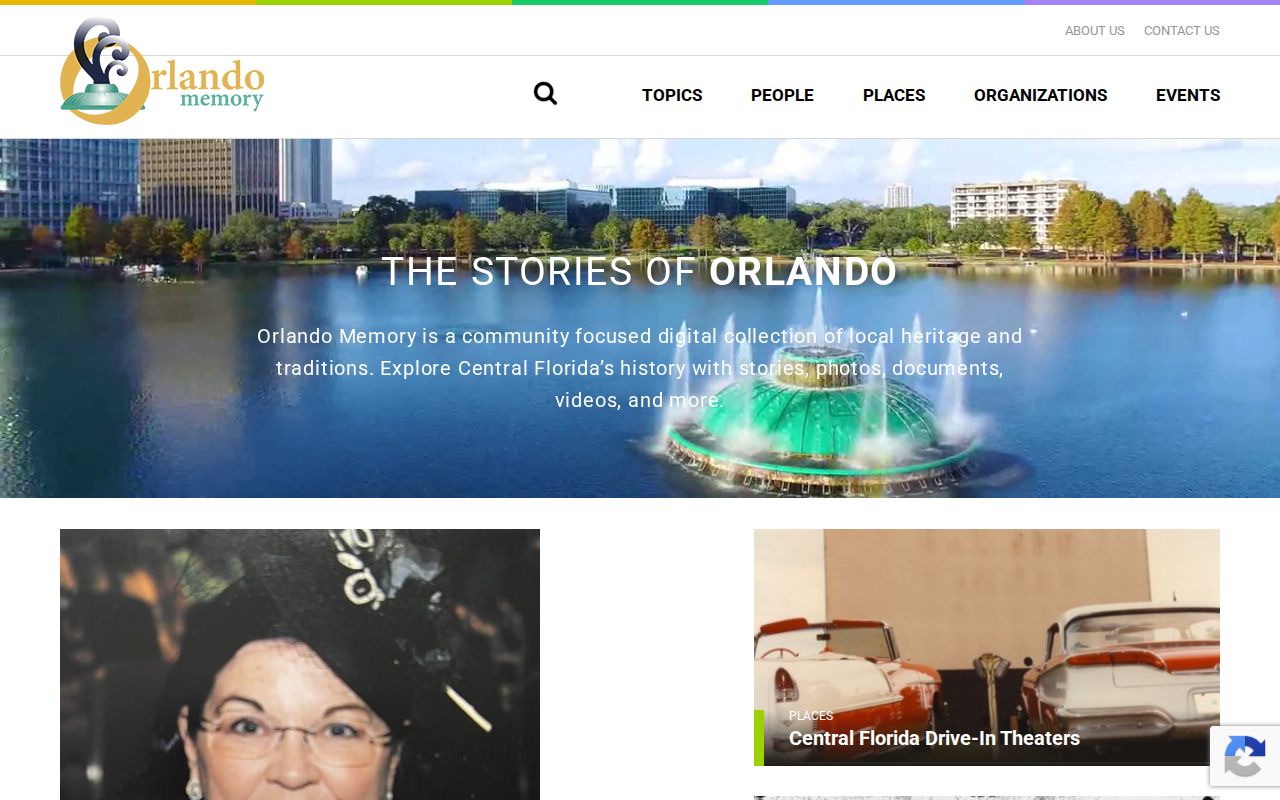
Search results should be checked at item level. Read the date, creator, stated scope, and attached scan rather than relying only on a modern landing-page summary.
Orange County Directory Archives
The Joseph L. Brechner Research Center at the Orange County Regional History Center holds photographs, maps, manuscripts, newspapers, ephemera, and vertical files. Research can require an appointment and staff help. Check its live access rules and fees before visiting.
This archive has a fitting history. The 1927 courthouse now houses the Regional History Center, so a former records building serves as a historical research channel. Current deeds and court filings remain with today's Comptroller and Clerk offices. The old courthouse is where a name, business, neighborhood, or organization may surface in archival context.
UCF Special Collections and University Archives adds Central Florida manuscripts, maps, photographs, organizational records, and campus or alumni history. Florida Memory searches state and local images, documents, maps, film, and audio. FamilySearch offers another catalog and digitized-county route, sometimes with account or affiliate-library limits.
Note: If a directory year is absent online, ask OCLS and the History Center before concluding that the volume does not survive.
Trace Orange County Families
A year-by-year city directory search can bridge the decade gaps between federal census schedules. Fix one anchor year first. Then move in both directions, keeping each fact tied to its edition.
- Copy the complete entry, including middle initial, spouse, occupation, employer, and address. Save the title and abbreviation pages.
- Check the same surname and address in the preceding and following available editions. Test name variants, initials, compound surnames, and punctuation-free forms.
- Use the street or criss-cross section, where present, to identify the next listed occupant and nearby entries.
- Pair directory years with public federal census schedules through 1950. The census can add household relationships, ages, birthplaces, and children.
- Compare the address with a Sanborn map, plat, and the property or deed chain. Close the personal trail with newspapers, obituaries, cemetery sources, or probate.
A disappearance has several possible causes: death, relocation, an omitted canvass, a missing edition, annexation, renumbering, or a choice not to be listed. The 1890 population census is largely lost nationwide, making nearby directory years especially valuable. For the modern address-keyed method, use the Orange County street directory rather than forcing present parcel data into a historical shelf search.
Orange County Directory Geography
Orange County began as territorial Mosquito County in 1824 and took its current name in 1845. Later county creations changed its boundaries. A nineteenth-century event may therefore belong to a keeper that does not match today's map. Search the period county name and boundary when early records fail.
Orlando became the county seat in the 1850s and incorporated in 1875. Its directory footprint then changed with the citrus and rail era, the 1920s boom, wartime growth, postwar suburbs, and Disney-era expansion. Earlier Orlando and Winter Park areas have stronger directory, Sanborn, plat, and newspaper trails. Newer places such as Horizon West, Lake Nona, Avalon Park, and Waterford Lakes are better represented in modern plats, GIS, permits, and association filings.
An “Orlando” title or mailing line never means countywide coverage. Eatonville, Winter Garden, Apopka, Maitland, Ocoee, and other municipalities have distinct community histories. Read each edition's stated reach and use contemporary maps before assigning an entry to a modern jurisdiction.
Eatonville Expands Orange County History
Eatonville, incorporated in 1887 and widely recognized as the nation's oldest incorporated African American municipality, needs more than a countywide name index. Church, school, town, newspaper, oral-history, and family collections can preserve links that printed city directories missed.
OCLS's 2025 Eatonville History Preservation Project invited community members to bring photographs, documents, and memories for scanning and preservation. That creates a living acquisition path. Family-held items can add names, dates, and relationships to the public memory record without pretending they are official certificates.
Historic Black Orlando research can also use Wells'Built exhibits, Orlando Memory, and local newspaper collections. Winter Park has Rollins College archives, while West Orange researchers can add Winter Garden Heritage Foundation material and the West Oaks genealogy collection. These local channels reflect the county's real communities better than treating every past resident as part of one Orlando roll.
Limits of Orange County Directories
A city directory is a publisher's dated snapshot. Adult and householder bias, canvass errors, skipped names, stale addresses, and selective inclusion all affect the result. A criss-cross entry may name one listed person, not every person at the address. A social register is narrower still.
“Digitized” does not mean complete, and “public” does not mean online. Some Orange County material remains on a shelf, in microfilm, in an archive box, or behind staff-mediated access. Conversely, a scan can be online while sensitive modern facts remain confidential or redacted.
Strong conclusions pair independent sources. A directory supplies a dated name and address. A census may show a household. A deed names recorded parties. Newspapers, obituaries, church items, yearbooks, and cemetery records add social or family context. Cite what each record actually says, record its date, and leave unresolved gaps visible.
Orange County's 1937 Directory
The inspected local sample is not a Polk directory. Orlando Memory's digitized 1937 Social Register of Orlando is a subscriber-oriented social list that openly warns of omissions. It covers Orlando and Winter Park residents plus people in several places outside the county. Club abbreviations include Rosalind, Sorosis, and University clubs.
Open the Orlando Memory item shown here.
The scan can connect names to households, clubs, and social networks. It cannot show all Orange County residents. A person outside Orange County may appear, while an omitted Orlando resident may simply have fallen outside the register's subscriber and club scope.
That quirk makes the volume most useful as affiliation evidence. Copy the personal name, printed geography, and club codes, then read the register's legend. Confirm the person through a directory, census, newspaper, or public record before treating the match as settled.